

Fast, Reliable Attic Insulation Across Trabuco Canyon
Attic insulation in Trabuco Canyon has to solve a problem most inland neighborhoods never face: keeping a home cool through 100-degree summer afternoons, warm through 45-degree canyon nights, and sealed against ember-laden Santa Ana winds in the fall. A standard fiberglass batt job won’t do all three. Our crews work with Rockwool mineral wool, CertainTeed fiberglass, and closed-cell spray foam to match the material to the house, the roofline, and the fire zone it sits in. Call (855) 473-6516 and we’ll walk the attic with you – most Trabuco Canyon estimates happen within 48 hours.
Why Homeward Insulation Co Is Trabuco Canyon’s Preferred Attic Insulation Company
We’re an insulation-only contractor, and that narrow focus matters in Trabuco Canyon. The homes here weren’t built for the fire codes and temperature swings we deal with now. A 1978 ranch off Rose Canyon Road has different attic needs than a 2005 custom build above O’Neill Regional Park, and the only way to know which material belongs where is to get into the attic and look. We do that every day.
Our team is led by Neil Dorfman, and the crews we send into 92678 and 92679 know the local failure patterns. We see the same things in Trabuco Canyon homes year after year: compressed R-11 batts at the eaves, soffit gaps pulling canyon dust into the insulation, vaulted ceilings with no room for proper vent baffles. Homeowners across Trabuco Canyon have called us after years of rooms that won’t hold temperature, and the fix usually starts in the attic, not the thermostat. We carry the material selection to solve it on the first visit, and we don’t push a single brand because we stock eight.
Attic Cleaning Services in Trabuco Canyon
Attic Cleaning Services in Trabuco Canyon are about more than tidiness – they’re the first step before insulation goes in, and often the only way to see what’s actually failing up there. The dry canyon winds push fine dust and debris through unsealed eave gaps all summer, and by the time we’re called, that dust is usually packed into the existing insulation and spread across the decking. In a typical Trabuco Canyon attic, cleaning means removing the old loose-fill or batts, vacuuming the decking to remove dust and any rodent droppings, treating any mold or mildew on framing, and preparing the bays for new material. Most homes here need this once the original insulation is past 15 to 20 years old, and it’s a standard part of any Attic Insulation in Trabuco Canyon upgrade we perform. Cleaning alone runs $1.50 to $3 per square foot depending on access and contamination level.
Decking Treatment and Dust Extraction
Before any new insulation goes in, the decking needs to be clean enough to inspect for moisture damage and gaps at the top plates. We use HEPA-filtered vacuums in Trabuco Canyon attics, especially in older homes where dust has been accumulating since the 1970s. It’s not a cosmetic step – it lets us see the air leaks that would otherwise get buried under new material.
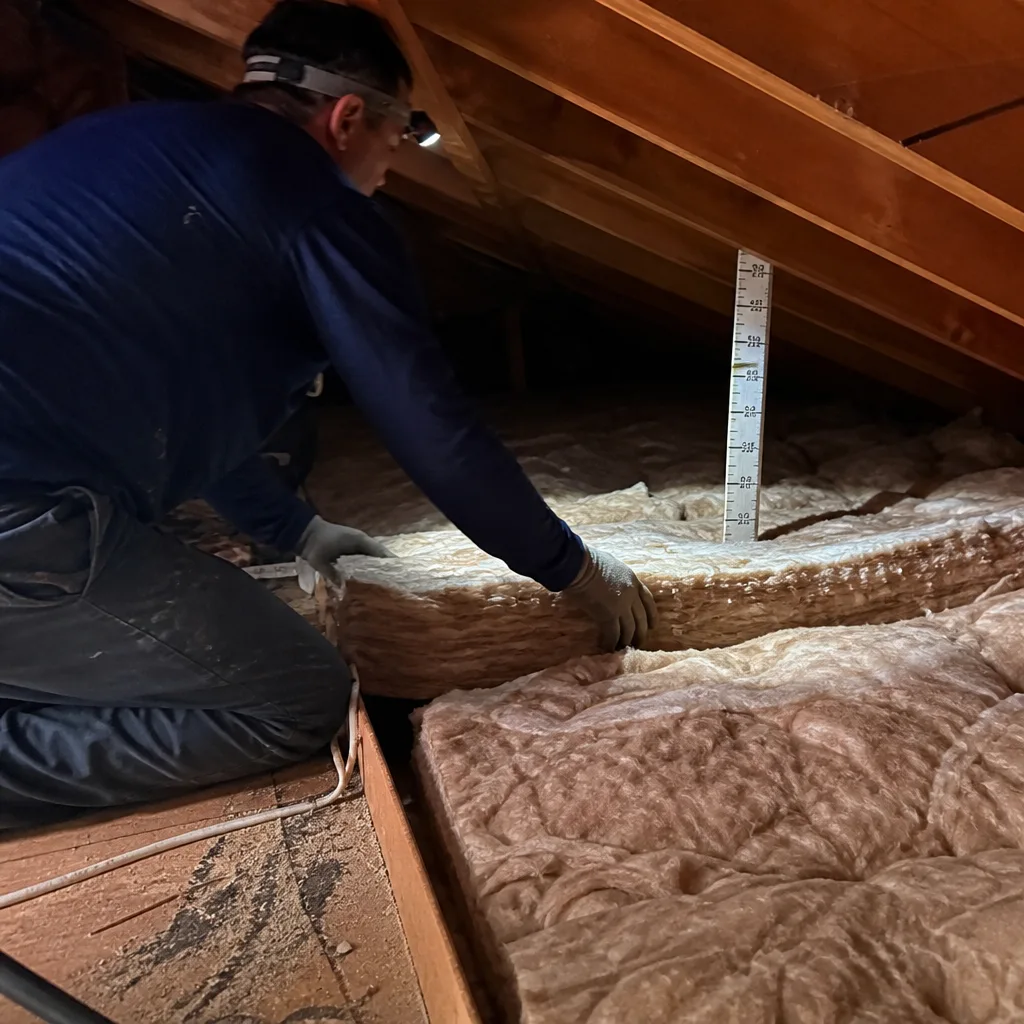
Blown-In Fiber Removal and Replacement Prep
If your Trabuco Canyon home has old, settled cellulose or fiberglass loose-fill, we remove it before air sealing or replacing it. Left in place, it hides the gaps at the eaves that let wind-driven rain into the attic during Santa Ana events. Pulling it out is the only way to do the job right.
What happens when you call
- 1
A real person answersNo phone trees — you reach a local pro.
- 2
You get an upfront price rangeHonest numbers before anyone is dispatched.
- 3
A background-checked tech heads outLicensed & insured, dispatched right away.
- 4
You approve before work beginsNothing starts until you say go.
Attic Mold Removal in Trabuco Canyon
Attic Mold Removal in Trabuco Canyon usually follows the same pattern: unsealed soffit or eave penetrations let damp canyon air into the attic, condensation starts on the underside of the decking, and mold takes hold. Older ranches off Trabuco Canyon Road and Plano Trabuco are particularly susceptible because many still have the original vent detailing, which wasn’t designed for the wind pressures this canyon generates. Removing mold here means treating the affected decking and framing with an EPA-registered antimicrobial, correcting the moisture source, then sealing the air pathways that fed it. Trabuco Canyon homeowners should expect to pay $1,200 to $4,500 for a typical attic mold remediation, depending on the square footage and whether the mold has reached the sheathing. It’s not a cosmetic fix – it’s the difference between an attic that stays dry and one that keeps feeding mold into the insulation.
Moisture Source Correction and Air Sealing
Mold doesn’t come back if the moisture source is gone. In Trabuco Canyon, that usually means sealing the top plates, soffit gaps, and any recessed can lights that open into the attic. We address all of those during the mold removal, not as a separate add-on.
Post-Remediation Insulation Replacement
Once the mold is treated and the attic is sealed, the old contaminated insulation needs to come out and be replaced. We install fire-rated mineral wool or blown-in fiberglass depending on the home’s construction and the fire exposure around it. A clean, dry, properly sealed attic is the baseline for everything else we do.
Trusted Brands We Service in Trabuco Canyon
We’re not tied to one manufacturer, and that’s the point. For Trabuco Canyon homes, we often reach for Rockwool mineral wool because it’s non-combustible and holds its R-value when wet – two things that matter at the wildland-urban interface. But a newer custom home with a sealed attic design might be better served by CertainTeed fiberglass or Johns Manville blown-in. We carry the full range, from Knauf batts to Rockwool rigid boards, and we keep our material lead times short for Trabuco Canyon customers by sourcing directly from local distributors in south Orange County. You don’t wait three weeks for product. You get what fits your attic, not what fits our inventory.
Common Attic Insulation Problems We See in Trabuco Canyon Homes
- Collapsed R-11 batts at the eaves. Original 1970s and 1980s insulation compresses after decades of heat cycling. The batts pull away from the top plates and leave a wind-washed gap that pulls canyon air straight into the attic.
- Unsealed soffit gaps that collect ember-laden air. During Santa Ana events, wind drives through any opening. The same gap that leaks heat overnight also brings embers into the attic, which is why fire-rated sealants and mineral wool are standard practice here.
- Vaulted ceilings with no insulation cavity depth. Many Trabuco Canyon ranch homes and custom builds have vaulted rooflines where there’s physically no room for standard batt thickness. Spray foam or high-density mineral wool is the only real option, and stacking batts just blocks ventilation.
- Wind-driven dust contaminating loose-fill insulation. Dry canyon winds push fine dust through any gap in the soffit or gable vent. That dust settles in the insulation, reduces its thermal performance, and holds moisture against the decking, which is where mold starts.
Pricing for Attic Insulation in Trabuco Canyon, CA
Attic insulation in Trabuco Canyon runs a wide range because the housing stock runs a wide range. A standard blown-in top-up for a 1,200-square-foot attic starts around $1,500 to $2,800. A full removal, air sealing, and mineral wool install on a 1970s ranch typically lands between $4,500 and $9,000. Spray foam on a vaulted ceiling runs $2.50 to $5 per board foot, and attic cleaning on its own is $1.50 to $3 per square foot. The largest cost driver in this canyon is access and the condition of the eave details – older homes with compromised soffits almost always need more sealing work than a newer home. Every estimate is free. Call (855) 473-6516 and we’ll give you numbers based on your actual attic, not a square-footage spreadsheet.
We Also Serve Cities Near Trabuco Canyon
We work up and down the canyon and into the surrounding foothills. Our service area includes Trabuco Canyon, Rancho Santa Margarita, Foothill Ranch, Portola Hills, and Coto De Caza. Each area has its own mix of housing stock and fire-zone requirements, and we adapt the same way we do in the canyon: by looking at the house, not the map.
Serving Trabuco Canyon, CA — Our Local Coverage Area
We’re based in the Trabuco Canyon area and know this community well. Use the map below to see our service coverage — if you’re nearby, we can almost certainly help.
FAQs About Attic Insulation in Trabuco Canyon
Trabuco Canyon sits at the wildland-urban interface, and during Santa Ana wind events, embers can enter through any unsealed eave or soffit gap. Standard fiberglass batts can smolder and melt; mineral wool from Rockwool is non-combustible and does not ignite. For homes in 92678 and 92679, we recommend fire-rated mineral wool at the eaves and sealed air barriers at every top plate and penetration. It’s not just about R-value – it’s about keeping an ember from finding a path into your attic in the first place. Call (855) 473-6516 to discuss whether your current insulation meets that standard.
For most Trabuco Canyon ranch homes with original R-11 batts, retrofitting beats Reflectix repair in Trabuco Canyon every time. The original batts have compressed for 40 to 50 years, the paper facing has degraded, and the eave bays have almost certainly opened up to wind-washing. Pulling the old material, air sealing the top plates and soffits with fire-rated sealant, and installing Rockwool mineral wool with a sealed barrier detail is the standard fix. It costs more upfront than stuffing new batts into the same cavities, but it solves the actual problem instead of hiding it. Get a free attic inspection and we’ll show you what we found.
Yes. The canyon’s daily temperature swing means the attic is constantly cycling between absorbing afternoon heat and losing overnight warmth. A single unsealed eave bypass leaks that heat all night in the winter and pulls hot air in all afternoon in the summer, which makes the insulation work far harder than it should. Trabuco Canyon homes benefit from a higher effective R-value at the attic floor plus complete air sealing at the eaves. Without the sealing, more insulation only gives you marginal gains. Our standard upgrade targets at least R-49 at the attic floor and a fully sealed eave plane.
Canyon winds in Trabuco Canyon pressurize the attic differently than inland neighborhoods. Wind-driven rain and dust enter through gable vents, soffit gaps, and any penetration in the roof plane, which soaks the insulation and feeds mold on the decking. Proper ventilation still matters, but it has to be wind-resistant: baffles that don’t collapse under pressure, sealed eave lines, and wind-resistant gable details. In practice, that means we often use mineral wool instead of fiberglass at the perimeter and verify every vent opening is properly flashed and screened. A wind-driven leak will undo a good insulation job in one storm season.
If your attic has visible mold on the decking or framing, if you smell mustiness from the attic hatch, or if there’s obvious dust and debris packed into the existing insulation in Trabuco Canyon, add mold removal and cleaning before the new insulation goes in. Installing new material over contaminated or dusty insulation seals the problem in and shortens the life of the new work. Our crews handle cleaning and mold remediation in-house, so it’s one call, one schedule, and one warranty. Call (855) 473-6516 for an assessment and we’ll tell you honestly whether your attic needs cleaning before it needs insulation.
Call Homeward Insulation Co for Attic Insulation in Trabuco Canyon
If your Trabuco Canyon attic hasn’t been looked at in years, or if you’re watching energy bills climb while rooms still won’t hold temperature, call (855) 473-6516. We’ll schedule a free attic assessment, measure the existing insulation, check the eaves and ventilation, and give you a written quote with actual material options. Neil Dorfman and our team work only in insulation – no roofing, no HVAC, no general contracting – so every visit is focused on one thing: making your attic do its job in the canyon.
Written by Neil Dorfman, Owner at Homeward Insulation Co, serving Trabuco Canyon and the surrounding foothill communities.