GreenFiber Attic Insulation in Portola Hills: A Homeowner’s Guide
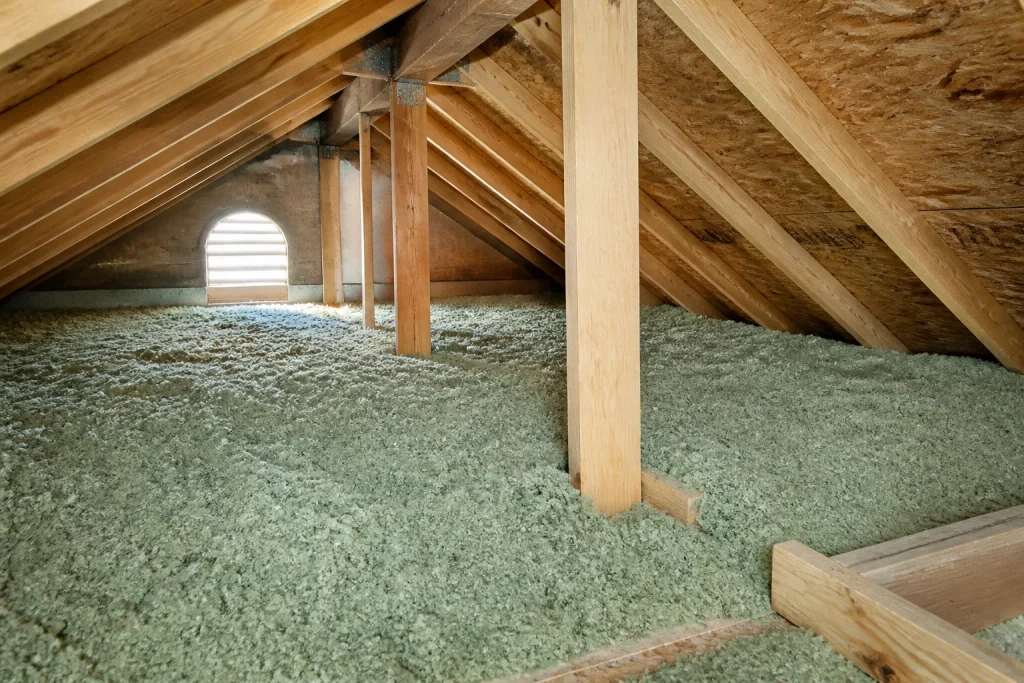
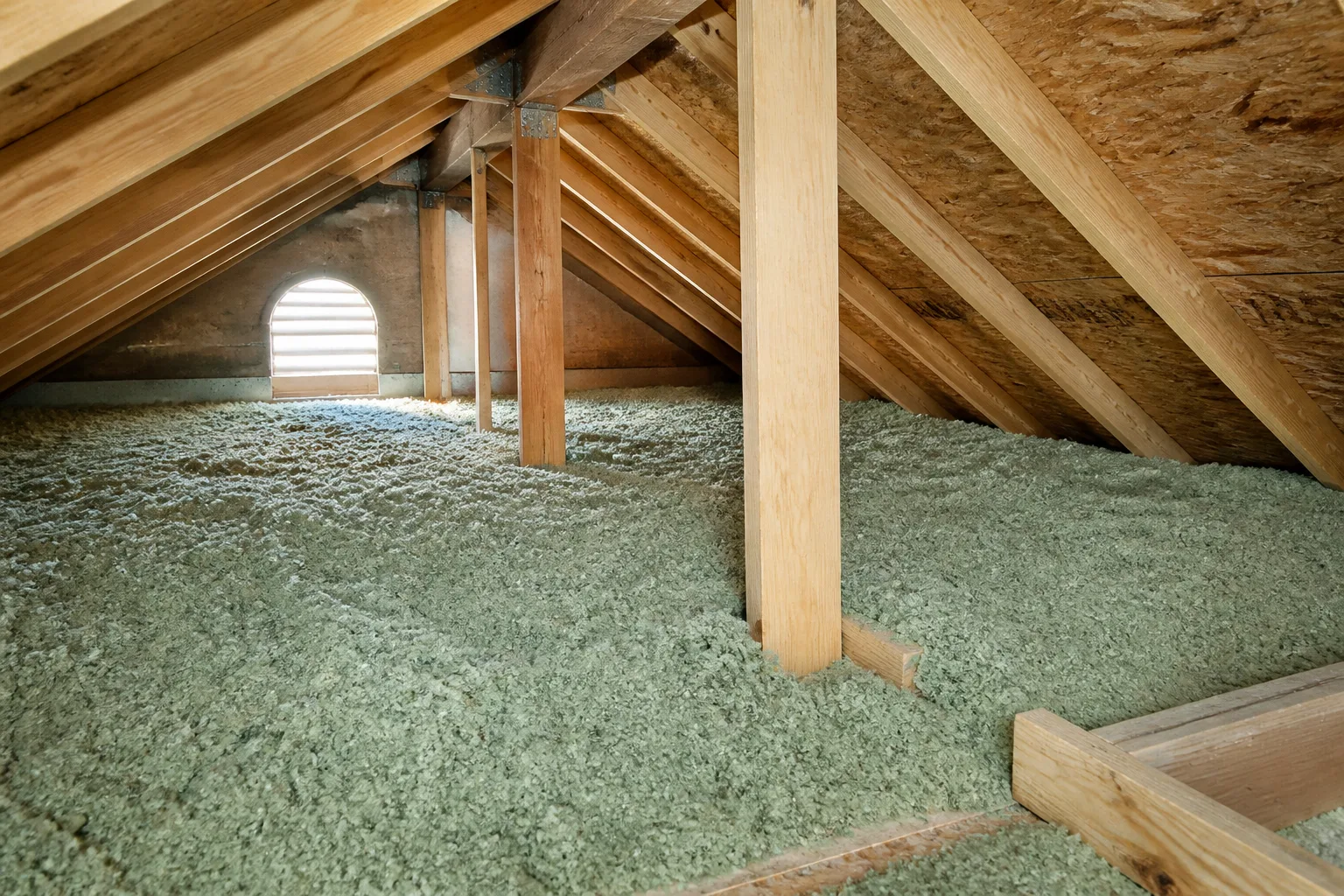
GreenFiber is a blown-in cellulose insulation made from roughly 85% recycled newspaper, most of it sourced from California printing plants. In Portola Hills, it’s one of the better options for homeowners dealing with hot upstairs rooms and stubborn AC bills, because it packs denser than blown fiberglass and blocks air movement more effectively. If you’d rather not sort through the details yourself, call (855) 473-6516 and we’ll give you a straight answer about whether it fits your attic.
Cellulose has been installed in American attics since the 1970s. It’s not a new product or an experimental one. Yet most Portola Hills homeowners have never been offered it. That’s not because it underperforms. It’s because a lot of insulation contractors don’t stock it. Fiberglass is lighter, cheaper to ship, and easier to blow through a hose with minimal training. Cellulose takes more care to install correctly. So the industry quietly defaults to fiberglass, and homeowners never learn there was an alternative.
We’re Homeward Insulation Co, an insulation-only contractor, and we’d like to fix that information gap. Here’s what GreenFiber actually does, when it’s the right call for a Portola Hills home, and when you should choose something else.
Key Takeaways
- GreenFiber cellulose is denser than blown fiberglass, which means better air-infiltration resistance in Portola Hills attics.
- It costs roughly $1.10 to $1.60 per square foot installed in the Portola Hills area, depending on depth and attic access.
- Treated cellulose resists fire and deters pests, addressing the two most common homeowner hesitations.
- Cellulose is not the right product when there’s existing moisture damage in the attic.
- Homeward Insulation Co offers free estimates and can tell you honestly whether GreenFiber matches your home.
What Makes GreenFiber Different From Blown Fiberglass?
The short answer: density. GreenFiber cellulose settles to roughly 2.5 to 3 pounds per cubic foot. Blown fiberglass settles closer to 1 to 1.5 pounds per cubic foot. That difference matters more than most homeowners realize. A denser material gives air fewer pathways to slide through. In a Portola Hills attic, where afternoon sun beats on the roof deck and superheated air pushes down into the living space, that air-blocking quality is exactly what you’re paying for.
There’s also thermal mass. Cellulose is heavier. It absorbs heat more slowly. During a Portola Hills summer day, the attic might hit 130 degrees by 3 p.m. Cellulose buffers that spike. It releases heat back out in the evening instead of radiating it through your ceiling at dinner time. Fiberglass simply doesn’t do this as well because it has less mass per inch to absorb heat with. This is why homes with cellulose often feel noticeably more comfortable from late afternoon through early evening, even when the thermostat reads the same temperature.
GreenFiber is also treated with borates. Those serve two functions: fire resistance and pest deterrence. The borate treatment interrupts the combustion process. It doesn’t make the material fireproof, but it gives it a Class 1 fire rating, which is the same rating fiberglass carries. As for pests, ants and termites don’t like borate-treated material. In Portola Hills, where drywood termites are a genuine concern, that’s a meaningful advantage over untreated fiberglass.
Where Cellulose Wins in Portola Hills Homes
Older Portola Hills homes, particularly those built in the 1970s and 1980s, often have shallow rafter tails or cramped attic clearance. You can’t stack six inches of fiberglass batts where there’s only four inches of headroom against the eaves. This is where blown-in cellulose shines. Because it’s installed loose and blown into place, it settles into every irregular cavity, around wiring, around plumbing vents, along the top plates of exterior walls. It fills the spots a batt installer skips or can’t reach.
We’ve pulled batt insulation out of Portola Hills attics in the Ridgeview and Saddleback areas where the original fiberglass had dropped nearly 40% of its R-value because it was compressed, shifted, or never fit properly against the roof framing. Cellulose doesn’t have that failure mode. It conforms to the cavity as it settles. Once it has settled, it stays put.
Density per inch is another factor. Cellulose delivers roughly R-3.5 per inch. Blown fiberglass delivers R-2.5 to R-3.0 per inch depending on how carefully it’s installed. So a Portola Hills homeowner who wants R-38 in the attic floor needs about 11 inches of settled cellulose versus 13 or more inches of blown fiberglass. In a tight attic, those two inches can be the difference between filling the cavity properly and leaving sections under-insulated.
GreenFiber also works exceptionally well for attics with finished or partially finished spaces. Portola Hills has a fair number of homes where the attic has been converted for storage, or the attic access is tight and awkward. Blown-in cellulose reaches areas a batt installer would have to contort to reach. This kind of situation is common in the Portola Hills planned communities along Antonio Parkway, where tract home attics are consistently tight and full of HVAC ducting.
Cost of GreenFiber Attic Insulation in Portola Hills
In Portola Hills, GreenFiber blown-in attic insulation typically runs $1.10 to $1.60 per square foot installed, depending on the R-value target, attic access, and whether old material needs removal first. For a typical 1,400 to 1,800 square foot attic floor, that works out to a range between $1,550 and $2,900 for a complete attic insulation project. These are Portola Hills area numbers, not national averages, and they reflect what we see on quotes in this market.
- R-30 (about 9 inches settled): $1.10 – $1.25 per square foot installed
- R-38 (about 11 inches settled): $1.30 – $1.50 per square foot installed
- R-49+ (about 14 inches settled): $1.45 – $1.60 per square foot installed
- Attic prep, air sealing, and old insulation removal: $300 – $800 depending on attic size and condition
Those numbers overlap with good-quality blown fiberglass. Historically, cellulose ran a bit more for material but saved a bit on labor because it fills faster. Today, in the Portola Hills market, we see the two at rough parity for comparable R-values. The deciding factor shouldn’t come down to saving forty dollars. It should come down to which material performs better for your specific attic. Call (855) 473-6516 and we’ll assess your attic and give you an exact number for both options.
Fire, Pests, and the Two Common Objections
Homeowners ask us two questions about cellulose more than any others. Will it burn? Will it attract bugs? Let’s answer both directly.
GreenFiber is treated with boric acid and other borate compounds. Borates are an effective fire retardant. The material resists ignition and does not support a spreading flame. GreenFiber carries a Class 1 fire rating, which is the same class assigned to fiberglass insulation. We’ve never yet had a Portola Hills homeowner express concern about fiberglass burning, but many hesitate about cellulose. The data says that hesitation isn’t warranted. Cellulose has been installed in over 3 million American homes and has an excellent fire safety record spanning five decades.
For pests, the borate treatment makes wood and paper fibers in cellulose unattractive to termites, carpenter ants, and silverfish. Borates are actually the same active ingredient used in many commercial termite pretreatments. When termites ingest borate-treated material, it disrupts their digestion and they die. It’s not a poison that kills on contact. It works biologically over time. In a place like Portola Hills, where drywood termite pressure is real year-round, having an insulation layer that termites actively avoid is a legitimate benefit.
One note for honesty’s sake: borates are water-soluble. If a roof leak soaks a section of cellulose, some of that treatment can leach out over time. That’s one reason moisture management matters so much with this material.
When Cellulose Is Not the Right Call
GreenFiber is an excellent product, but we’re material-agnostic, and that means telling you when it’s wrong. Here’s the honest list.
First, existing moisture damage. If there’s a roof leak, a bathroom vent dumping humid air into the attic, or previous water staining on the roof sheathing, cellulose is not your first call. Blowing a water-absorbing material over a wet substrate is a recipe for lower R-value and mold growth. Before any cellulose installation in a Portola Hills home, the crew should inspect the roof deck and attic floor for moisture. If we find evidence of an active leak, we tell you to address the roof first. Period.
Second, if air sealing is going to be part of the job, closed-cell spray foam may outperform cellulose. Spray foam does two jobs at once: it insulates and it air-seals. Cellulose insulates well and reduces air movement, but it still allows a small amount of air to pass through. For Portola Hills attics with significant air leakage through the top plate, around bathroom fans, and around recessed light fixtures, a closed-cell foam like spray foam insulation may be the stronger choice. We carry two spray foam brands, Icynene and Demilec, so we can compare them directly against cellulose for your specific attic.
Third, if you’re specifically targeting fire and sound performance, mineral wool like Rockwool may beat both. Rockwool is naturally fire-resistant without chemical treatment, and it absorbs sound better than any blown-in product. For a Portola Hills homeowner converting an attic to a bedroom or home theater, a Rockwool batt installation sometimes makes more sense than blown cellulose.
The point is that GreenFiber is one strong option among several. When it fits, it’s often the best price-to-performance pick for attic insulation in Portola Hills. When it doesn’t, we’ll tell you that too, and recommend what actually should go in.
How GreenFiber Performs in Portola Hills’ Climate
Portola Hills sits in the shadow of Saddleback Mountain, at roughly 1,000 feet of elevation. That altitude moderates the peak heat slightly compared to lower Orange County, but summer afternoons still regularly crest 90 degrees, and attic temperatures climb far higher. The county sits in a semi-arid zone. Humidity is rarely the problem. Radiant heat from the roof deck is.
This is where cellulose’s thermal mass works in your favor. Think of it this way: a heavy cast-iron pan holds heat longer than a thin aluminum one. The same principle applies in an attic. Dense cellulose absorbs the afternoon’s heat surge slowly, then releases it gradually after the sun drops. Your ceiling doesn’t get blasted with the full thermal load at 4 p.m. Fiberglass, being lighter and less dense, lets that heat pulse through more quickly.
Research from Oak Ridge National Laboratory backs up what we’ve seen in Portola Hills homes. In hot-climate testing, attics with dense-packed cellulose showed measurably lower peak afternoon heat transfer compared to attics with batts or loose-fill fiberglass, even at matched R-values. The difference is most apparent during heat waves, which are when Portola Hills homeowners care the most about it.
For older Portola Hills homes with cellulose installed and settled over the years, the material maintains its R-value well. It does not sag away from roof framing the way fiberglass batts do. It does not degrade from air movement the way loose-fill fiberglass can. If it stays dry, it works the same at year five as it did on day one. That’s a meaningful point in a climate where attic insulation is doing real work for eight months of the year.
What to Check Before Any Cellulose Installation
There’s a right way and a wrong way to install cellulose. The wrong way is fast, sloppy, and responsible for every bad thing a homeowner has ever heard about the material. Here’s what a proper attic insulation in Portola Hills job requires.
- Moisture check of the roof deck and attic floor. No cellulose over wet wood. Ever.
- Air sealing first. Top plates, plumbing penetrations, wire holes, and recessed light housings should be sealed before any loose material is blown in.
- Baffle installation at the eaves. This keeps soffit vents clear so the attic still breathes. Baffles prevent cellulose from blocking airflow at the roof edges, which is critical in Portola Hills where most homes use passive attic ventilation.
- Dam or blocker construction around the attic hatch. Otherwise the material piles against the access door and makes a mess every time you open it.
- Depth markers installed on the vertical framing. This ensures even coverage and correct final R-value across the entire attic floor.
- Blowing at the correct density. Under-blown cellulose settles too much. Over-blowing wastes material. The installer should know the difference.
A competent crew on a standard Portola Hills attic finishes a cellulose install in four to six hours. The mess is minimal when the job is done right. The homeowner should be left with an attic floor that looks evenly filled, with every corner and edge covered.
When to Call a Pro
Blown-in insulation is not a DIY project, at least not for most homeowners. The machine required to blow cellulose properly is not something you rent at the local hardware store with great results. More importantly, working in a Portola Hills attic in August is genuinely unpleasant: 130 degrees at the peak, tight clearance, and a material that is dusty even when properly installed. The wrong mask and the wrong installation depth can turn a weekend project into a health nuisance and a code violation.
If your attic has any signs of moisture, if you’re not certain what R-value your home needs, or if you’d rather not spend a Saturday crawling through fiberglass dust and old rodent droppings, this is the moment to call someone who does insulation for a living. It’s all we do. We’re blown-in insulation specialists, and we’ve spent years learning the fine points so you don’t have to.
The Bottom Line
GreenFiber cellulose is a dense, fire-resistant, pest-deterring insulation that outperforms blown fiberglass in Portola Hills attics with shallow clearance or irregular framing. It costs roughly the same as good fiberglass when installed correctly. Its limitations are real but specific: moisture and the need for a skilled installer. If you have a dry attic and want the best air-blocking performance per dollar, GreenFiber is often the right answer and the product most contractors won’t voluntarily offer you.
If you’re in Portola Hills and you’d like an honest assessment of whether GreenFiber fits your attic, Homeward Insulation Co offers free estimates. Call (855) 473-6516 and we’ll come out, look at what’s in your attic, and tell you what we’d recommend and why. No pressure, no brand loyalty. Just the right insulation for your home.
Frequently Asked Questions
Yes. GreenFiber is treated with boric acid, which is a low-toxicity compound with a strong safety record. It’s the same active ingredient used in many household pest treatments and even some eye wash solutions. Once installed properly, the material is not airborne and poses no ongoing exposure risk. If you have questions about the material, call (855) 473-6516 and we’ll walk you through it.
Indefinitely, as long as it stays dry. Cellulose does not degrade, sag, or lose R-value from age. The only real threat is water. A roof leak or a bathroom fan venting directly into the attic can reduce performance over time. In a dry attic, GreenFiber will perform the same at year 15 as it did on installation day.
GreenFiber is installed with a settle factor built into the depth calculation. The installer blows more than the final settled depth, and the product is engineered to settle to the intended R-value within the first few weeks. After that initial settling period, minimal additional settling occurs. A proper install means you keep your R-value for the life of the home.
It depends on the attic. Cellulose is often the better value for a standard vented attic where air sealing has already been addressed. Spray foam is better when the attic is tight, unvented, or has significant air leakage that needs to be sealed as part of the insulation. We install both and we’ll tell you which one actually fits your situation. For a free assessment, call (855) 473-6516.
Written by the team at Homeward Insulation Co, serving Portola Hills since 2012.
Need Insulation Help?
Call Homeward Insulation Co — licensed & insured, here with fast after-hours help in Portola Hills.
(855) 473-6516